
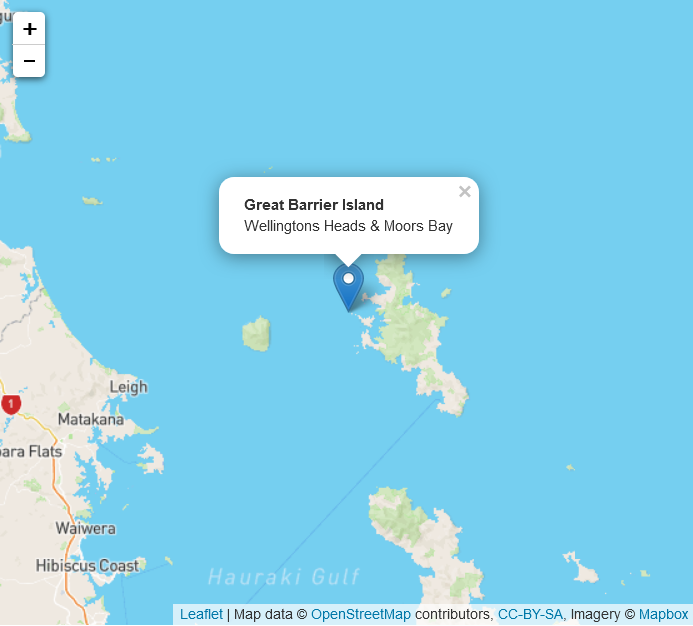
Great Barrier Island Wellingtons Heads & Moors Bay
DESCRIPTION
Dive Site Review by Simon Collins
Photos by Simon Collins & Andrew Simpson
I’ve been living in Auckland for about 4 years now and every time I head up north or am out fishing on the kayak around Brown’s Bay, I look out towards all the islands on the horizon and say to myself, “I must get out there soon”.
Well I finally made it happen and went for a day’s diving at Great Barrier. The two sites we visited were Wellington Heads and Moor’s Bay/Beach. When I was arranging this trip I had planned it to be a bit of a hunting trip, which it was. But the final result was that I want to return there with my camera
Wellington Heads was our first dive site and admittedly my attention was mostly aimed at the craggy spots amongst the kelp where Crayfish would be living. And sure enough they were relatively plentiful with the aid of my buddy who was very good at finding them. Fortunately for the Crays, my skills at noosing them was less so.
The visibility was low, about 6 metres and we had planned to dive to a maximum of 20 metres, but deeper depths could easily be achieved. The cracks that the Crays lived in also held host to Nudibranchs, Crabs, Shrimps, colourful Sponges and Big Eyes, so the low visibility didn’t spoil the dive. Amongst the kelp, there were plenty of Goatfish and Leather Jackets. Some very large Short Tailed Stingrays could be found resting in the kelp and under the same rocks where we were looking for the Crays. They sat there calmly watching our poor attempts at bagging a feed. Eagle Rays were seen by other divers flying around above the kelp.
On our safety stop we found a patch of rock that had Crabs and Shrimps living side by side amongst the cracks.
Our second dive site was close by to our first, Moors Bay. We descended into low visibility and into a large school of Maomao and then to the kelp covered floor. The terrain was flatter here and so we headed towards where we had been told there were a series of swim throughs. The area got less flat and soon we were finding cray fish in the entrances to small overhangs. A school of large Silver Drummer circled the area, their size and speed was impressive
We found a few potential swim throughs that looked like they could have had an exit at the other end big enough for a diver, but we only looked around the colourful sponge covered entrances of these.
A little further on and we found a much larger swim through at 12 metres. It too, was full of colourful sponges and Bryozoans, but my narrow beam torch didn’t do the colours justice. The entrance was a few metres across and it stayed like this for about 15 metres before narrowing slightly around a bend and then opened up into a clear sandy gully between two large rocks where we made our ascent to the surface.
I will certainly be looking to return here with my camera in the near future.
