
Wildlife of the Month - Firebrick Starfish
Anna Clague Jan 29, 2025
Asterodiscides truncates
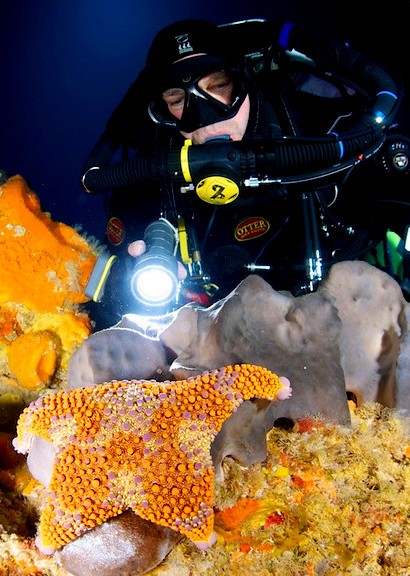
Habitat - There are two species of Asterodiscides found in New Zealand’s EEZ, Asterodiscides truncatus and Asterodiscides grayi. Asterodiscides truncatus has a slightly more southern distribution, known from southern and south eastern Australia, northern New Zealand and Raoul Island in the Kermadecs. Can be found from the surface waters down to 800m.
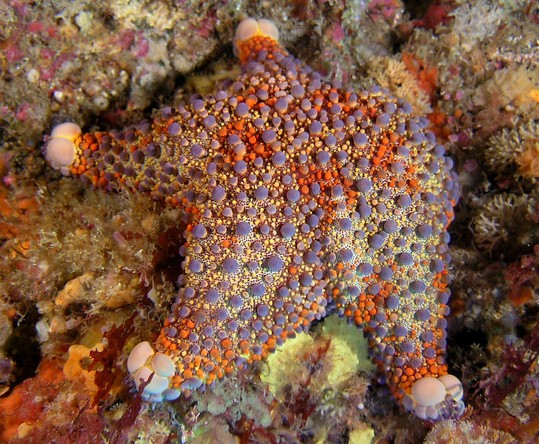
Feeding - truncatus feeds by grazing on sponges and other colourful benthic organisms. They use their water-powered tube feet to move around on the seafloor and to pass wayward food particles along to the mouth in the centre of the disc.
Size - It reaches up to 12cm across. Five arms, disc radius approximately 1/2 the length of the arms.
Breeding habits - It has been observed releasing gametes into the water column by standing on the tips of its arms to raise its body off the sea floor. However, little is known of the biology of this starfish
Defense – possibly has chemicals present that are very unpleasant tasting. Fishes and other predators learn that starfish are disgusting and may make them ill.
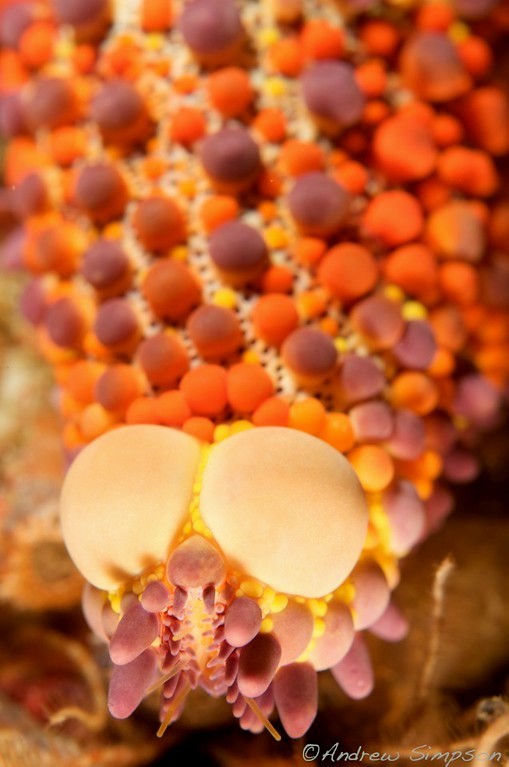
Description – Starfish can be distinguished from Ophiuroidea (brittle stars, etc) by the presence of a canal or furrow on the underside of their arms. These furrows contain the tubefeet which are usually in rows of two or four. The tube feet are tipped with suckers and do not have any spicules. The starfish has brightly coloured tubercles on the aboral surface. The tubercles vary in size and colour, making a red, purple and orange pattern. A commensal shrimp can sometimes be found living among the tubercles. There is a pair of very large tubercles at the tip of each arm.
