Wildlife of the month - Eagle Ray
Andrew Simpson Sep 10, 2026
Myliobatis tenuicaudatus
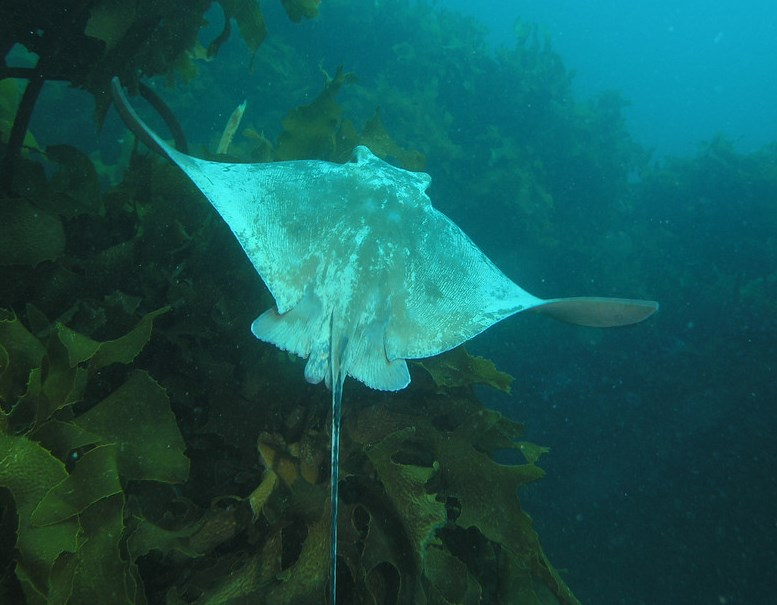
One of New Zealand's most graceful underwater encounters, the Eagle Ray is a distinctive and fascinating creature. Often spotted gliding through kelp forests or resting quietly on the seafloor, here's what to know about this impressive species.
Habitat
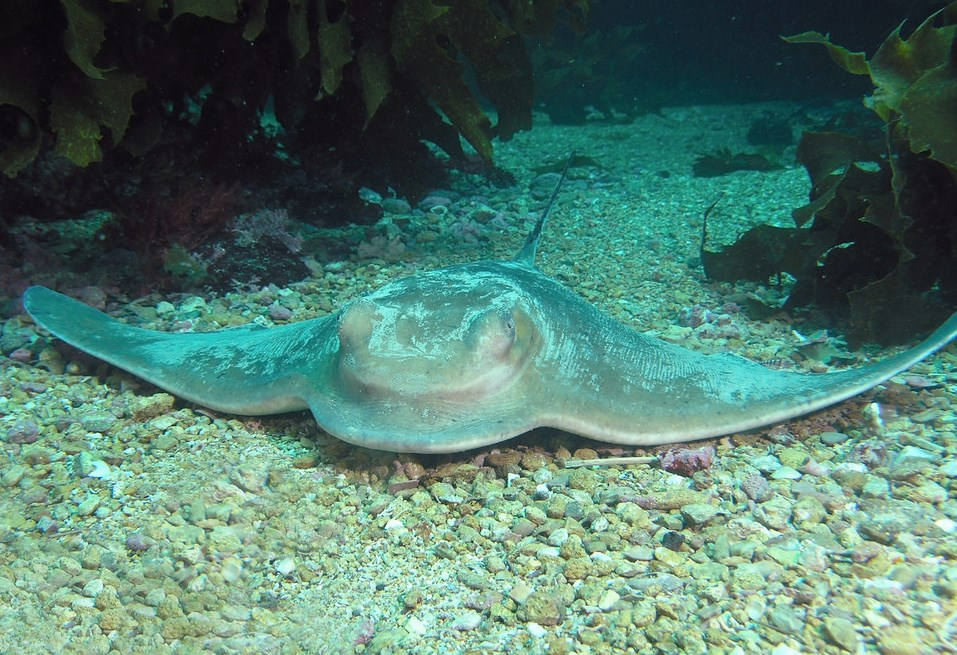
Eagle Rays are bottom dwelling for feeding purposes and are mainly found in sandy or muddy areas, though they can also be encountered over reefs. They range from shallow coastal or estuarine waters down to 160 metres and are often seen resting on the bottom.
Feeding
Eagle Rays feed on crustaceans and shellfish, including hermit crabs, scallops, and worms. They have strong, broad plates of teeth which they use to crush their prey after excavating them from the sand or mud by blasting jets of water out of their gills.
Size
Eagle Rays can reach up to 2 metres across their wingtips, with females growing larger than males.
Breeding Habits
Live, fully formed young are born in early spring. Mating occurs in January and February. During mating, the males grip the back of the females with their mouth, which leaves a visible round scar. Males can be distinguished by the claspers jutting out from the base of their pelvic fins, which are used for fertilisation.
Defence
The Eagle Ray has a venomous spine on its tail. While encounters are generally safe, divers should be mindful to observe from a respectful distance and never handle or corner these animals.
Description
Eagle Rays can be distinguished from stingrays by their pointed wingtips, which they flap to swim in a characteristic flying motion. They also have a notably humped forehead. They are dark green to yellow-brown in colour, occasionally with faint grey or blue markings. Typically solitary, they will gather with others during the breeding season. Eagle Rays are part of the cartilaginous group of fish, meaning their skeleton is made of cartilage rather than bone.