
Wildlife of the Month - Christmas Tree Worms
Anna Clague Jan 29, 2025
Spirobranchus giganteus
Habitat – Christmas tree worms are widely distributed throughout the world's tropical oceans from the Caribbean to the Indo-Pacific. The worms will take in sand, storing grains away to assist in building tubes to anchor them to corals. These worms are sedentary, meaning that once they find a place they like, they don’t move much. In fact, while the colourful crowns of these worms are visible, most of their bodies, up to two-thirds of the worm, are anchored in burrows that they bore into live coral.
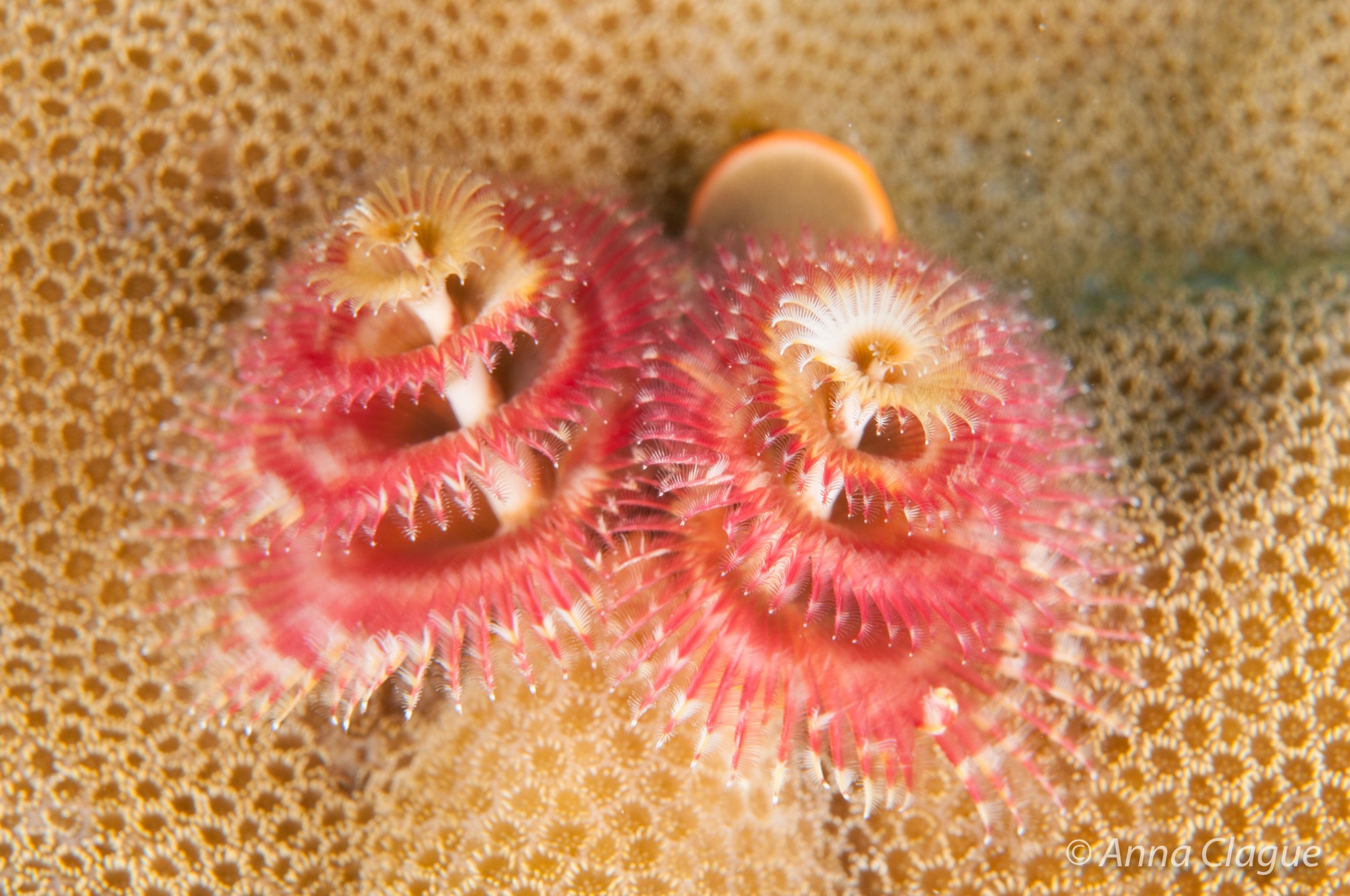
Feeding - As sedentary inhabitants of coral reefs, Christmas tree worms feed primarily by filter feeding. The worms' most distinct features are two "crowns" shaped like Christmas trees. These are highly modified mouth appendages. These appendages are used to catch dinner and for respiration hence, the spirals are commonly called "gills". Each spiral is composed of tiny-hair-like bristles used to catch food as it passes, to be transported to the worm's mouth. They filter microscopic plants, or phytoplankton, floating in the water.
Size - Approximately 4cm in length
Breeding habits - When they reproduce, they simply shed their gametes straight into the water where the eggs and spermatozoa become part of the zooplankton carried by currents. The fertilized eggs develop into larvae that then settle on coral heads and begin burrowing in to form their homes.
Defense - When startled, these worms will quickly retreat back into their burrows, later poking a small amount of their bristles back out of their burrows to determine if the danger has passed. It secretes a calcareous tube around its body which is the worm's home and protection. The worm usually settles onto a head of living coral before secreting its tube, increasing its level of protection as coral tissue encases the calcareous tube. When the worm retreats into its tube, the opening is shut using an operculum, which is further protected by sharp, antler-shaped spines.
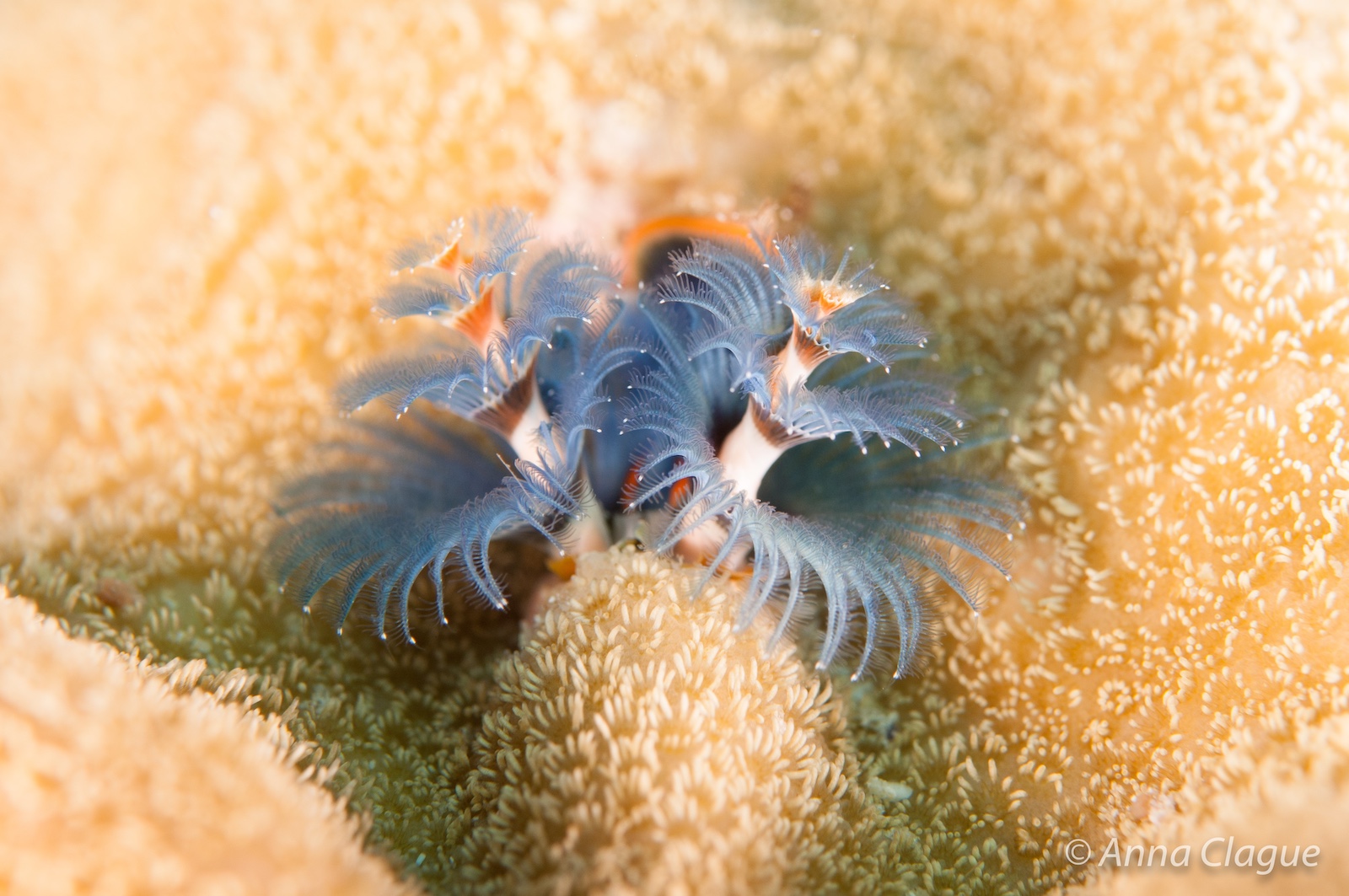
Description - Each worm has two brightly coloured crowns resembling miniature Christmas trees, that protrude from its tube-like body. It possesses a complete digestive system and has a well-developed closed circulatory system. Like other annelids, these worms possess well-developed nervous systems with a central brain. Both its common and Latin names refer to the two colourful spiral structures, the most common feature seen by divers - essentially translates to "spiral gills".
