
The Ultimate Guide to Learning to Scuba Dive in Auckland
Kate Heeks-Purell Jan 29, 2025
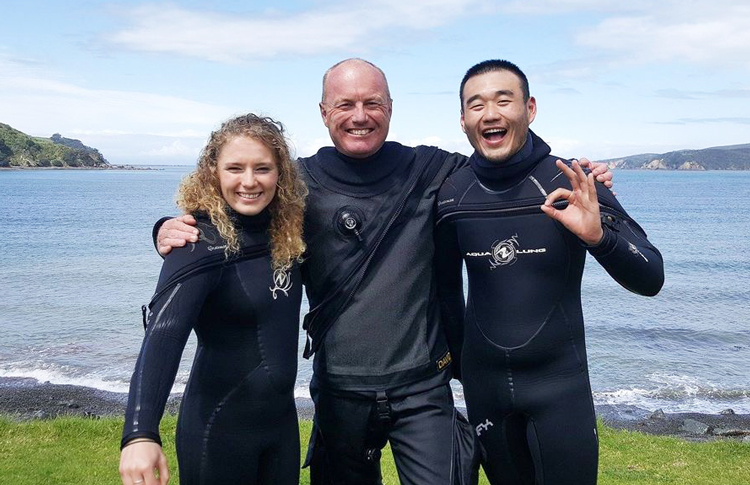
Are you living in Auckland and thinking of learning to scuba dive? Not sure where to start? Buckle up: we're going to tell you everything you need to know.
Why should you learn to dive?
Explore parts of New Zealand you never knew existed
Let's face it: geographically speaking, New Zealand is pretty special. Unsurprisingly, Kiwis are renowned for our love of tramping, surfing, skiing and adventuring our way around Aotearoa (and making the rest of the world jealous.)
But what if we told you there's a side of New Zealand that few Kiwis ever get to see? It’s filled with landscapes you’ve never seen. Wildlife around, above and below you.
Best of all? Some of New Zealand's best scuba diving locations - complete with shipwrecks, sub-tropical reefs, seaweed forests, and underwater arches - are within a couple of hours' drive of Auckland. Your weekends just got a whole lot more exciting.
Discover the brilliant Auckland scuba diving community
Considering that you can't hold a conversation underwater, it might surprise you that scuba diving is an extremely social activity! Beginner divers will find the scuba community super-friendly, welcoming, and generous with their knowledge and expertise. Many dive shops and dive schools have clubs which organise regular dive trips for their members, both locally and overseas.
Step out of your comfort zone
Learning to scuba dive will challenge you to face your fears and push your boundaries. No two dives are the same. There will always be new learning experiences, new locations to explore, new underwater creatures to meet and new friends to make.
We’re going to give you all the information you need to get started on your scuba journey. From choosing a dive school to top beginner dive spots, everything you need is here.
Ready to dive in?
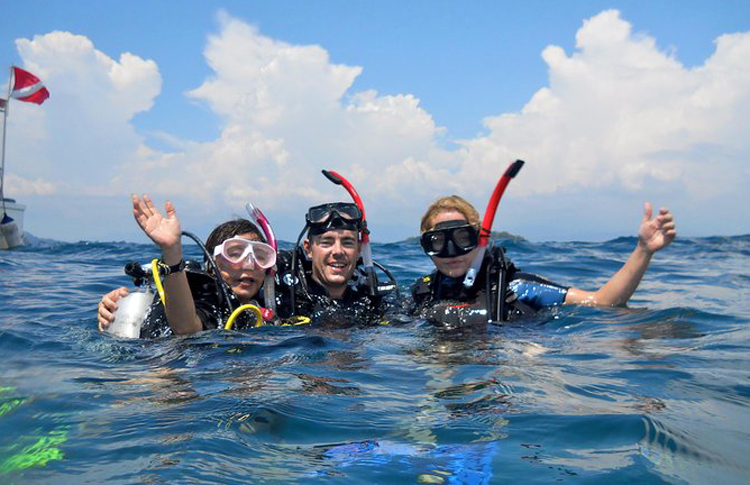
Learning to Dive
So if you want to experience this magical underwater kingdom for yourself, where do you start?
Get Certified! Dive centres and resorts need proof of your dive skills before they will rent scuba equipment, fill scuba cylinders or book dive excursions for you.
So your first step will be to enroll on an Open Water Diver certification course.
Open Water Diver Certificate - Your Underwater Passport
Before you head under the ocean, you'll want to take a training course to obtain your Open Water Diver Certificate, for two main reasons:
- It ensures you have learned the skills you need to dive safely
- No reputable dive resort or equipment provider will let you dive without it.
How to get your Open Water Diver certification in Auckland
To get your Open Water certification, you'll need to take a course from an accredited course provider or diving school. Look for a diving school offering a course accredited by one of the two main global dive training organisations. These are:
SSI (Scuba Schools International)
- PADI (Professional Association of Diving Instructors)
Here at Global Dive we offer SSI Open Water Diver certification so your certification card will be recognised and accepted pretty much anywhere in the world, giving you greater freedom and more dive options.
What happens on an Open Water Diver Course?
The Open Water Diver course is split into 3 parts:
1) Knowledge Development through online theory
2) Confined Water Dives
3) Open Water Dives
Let's look at these in more depth:
Part 1: Knowledge Development - 8-15 hours (self-study)
Before hitting the water you will study basic diving theory online at your own pace. From choosing scuba gear to underwater hand signals, you'll learn the principles, concepts and terms essential for dive safety and enjoyment. There will be knowledge reviews along the way to check you have a good understanding.
Usually on the first day there is an exam with your instructor, giving you a chance to go over any parts of the theory that your not sure about and to answer any questions you might have. Once completed you will to move on to Confined Water Dives.
Part 2: Confined Water Dives (around 10 hours total)
Learn and practise basic scuba skills in a safe environment. Setting up your gear, entering the water, buoyancy control and navigating while underwater, are all included. Your instructor will teach you how to use scuba equipment and take you through the same steps that you will use when diving in open water. Confined Water Dives normally take place at a local swimming pool or sheltered sea pool.
When you have demonstrated to your instructor that you can complete the key scuba skills safely in a confined pool, you are ready to try them in open water.
Part 3: Open Water Dives (4 dives, usually spread over 2 days)
Put your skills to the test! You will do four Open Water Dives giving you the chance to review, practice, apply and demonstrate what you have learned.
Your first dive will allow you time to get used to the ocean environment and practice your skills. Dives 2 and 3 are mainly about assessing you, while the final dive may be more relaxed - it's time for you to enjoy exploring underwater while learning to navigate this new world.
The End Result
Once completed, your life-long SSI or PADI Open Water Diver certification permits you to dive worldwide, to a depth of 18 metres.
Find out more about Global Dive's Open Water Diver course
How long does the Open Water diver course take?
You can complete the course in as little as 4 days (after completing the online theory component in your own time). But it doesn't have to be 4 consecutive days: many course providers spread the sessions over several weekends or a mix of evenings and weekends.
Who can take an Open Water Diver course?
There are a few requirements and restrictions:
Minimum Age: Can my kids learn to dive with me?
SSI's & PADI's minimum age is 10. However, dive schools may have their own restrictions to make sure younger divers are getting the attention they need.
For example, at Global Dive our minimum age for the Open Water Diver course is 15. But 10 and 14-year-olds can be booked on a private Open Water course with us, so we can give them extra support.
Maximum Age: Is there an upper age limit for learning to dive?
No, there's no upper age limit for learning to dive! Being fit to dive is the only requirement, no matter what your age.
Don’t believe us? Read about a diver who celebrated his 99th birthday underwater!
Swimming requirements
You must be able to swim 200m (any stroke and no time limit) and tread water for 10 minutes.
Health conditions: are there any medical restrictions?
The bad news? Diving can be dangerous and inadvisable for people with certain medical conditions. But the good news is that scuba diving is much more accessible than you think. You might assume that asthma, for example, would prevent you from diving. This is not necessarily true!
The Diver Medical Statement
Before joining an Open Water Diver course you need to complete a Diver Medical Statement.
If you suffer from conditions affecting your ears, sinuses, respiratory or heart function, or that may alter consciousness, the form will ask you to seek an evaluation from a doctor.
The doctor will assess your level of risk - this varies from person to person, and you may be surprised to find that your condition won't prevent you from learning to dive.
Here are some common medical-related questions we get asked:
1) Can I scuba dive if I have a physical disability?
Many people can, and do! Techniques and equipment can be adapted for differently-abled bodies.
2) Will asthma stop me from being able to scuba dive?
Not necessarily. It may depend on what triggers your asthma. If it's triggered by exercise or cold air, your doctor may advise you that diving is too risky. But if you have allergy-induced asthma, your symptoms are well controlled, and you're physically fit, you may be able to learn to dive if your doctor approves.
Further information about diving and asthma.
3) Can I scuba dive with high blood pressure?
High blood pressure can pose serious health risks for divers. However, if your high blood pressure is well controlled, and you are generally fit and well, you may still be able to dive.
Find out more about diving and high blood pressure.
4) I'm pregnant - can I learn to dive?
Diving while pregnant is not recommended, as too little is known about how scuba diving can impact the fetus.
If you’re worried about your fitness to dive, hopefully, the above information has answered some of your concerns and encouraged you to check with your doctor before assuming that you can’t learn to dive!
Having looked at if you can learn to dive, it’s time to find out about where you should learn to dive.
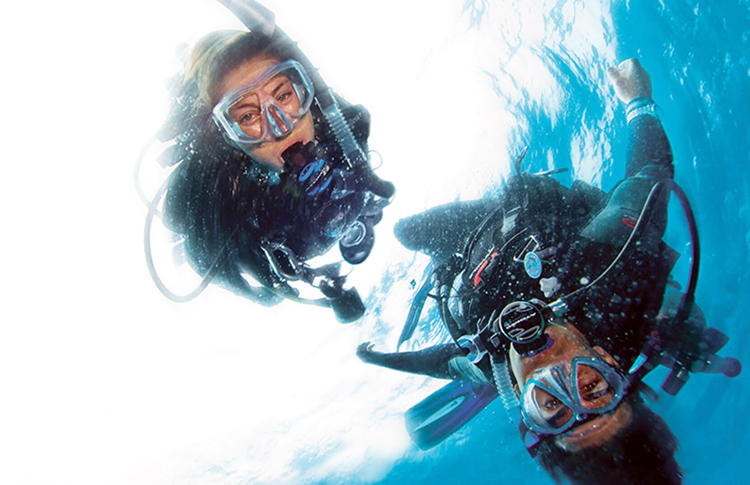
How to choose a dive school in Auckland
Aucklanders are in luck - being a waterside city, there are many diving clubs and schools to choose from. So what should you look for when choosing a diving school?
Here are the questions you need to ask when choosing a dive school:
1) Are the dive school's courses certified by a recognised diving organisation?
As previously mentioned, SSI and PADI are the two best-known dive agencies globally. If you have your heart set on a dive school whose courses are not SSI and PADI certified, do plenty of research before you commit.
2) How long does the course last? Is it flexible?
As a guide, the Open Water Dive course should take at least 4 days. This could be spread over 2 weekends, or 4 consecutive days, or spread over several weeks.
Some people like to learn intensively, while others prefer time to absorb information in between lessons. Look for a dive school with flexibility - do they offer extra pool sessions if you need more practice before heading to open water?
3) What is the school’s student-to-instructor ratio?
With fewer students per class, you get more personal attention from your instructor.
At Global Dive our maximum class size is 6, allowing for plenty of quality one-on-one instruction time. Some courses have bigger class sizes - if they have more than one instructor per class, that's fine. If not, steer clear.
4) Is the course a fair price? And what is a fair price?
You can expect to pay around NZD $700 - $1500 for your Open Water Dive course. But don't base your final decision on price alone.
If you're looking at a cheap deal, ask yourself if the school is cutting any corners...
Does the price of the course include training materials? If you visit the school, does the equipment look well-maintained? Are the class sizes high? Do they rush through the course quickly?
No discount is worth risking your safety for, so don't be seduced by the cheapest option.
Look for hidden costs: are you expected to buy your own mask, snorkel, fins and booties? Some courses are all-inclusive, and some offer rental if you don't have your own snorkel gear.
Remember: if you do your research, ask plenty of questions, check for hidden costs and talk to the dive staff, you'll have the best chance of picking the best dive school for you.
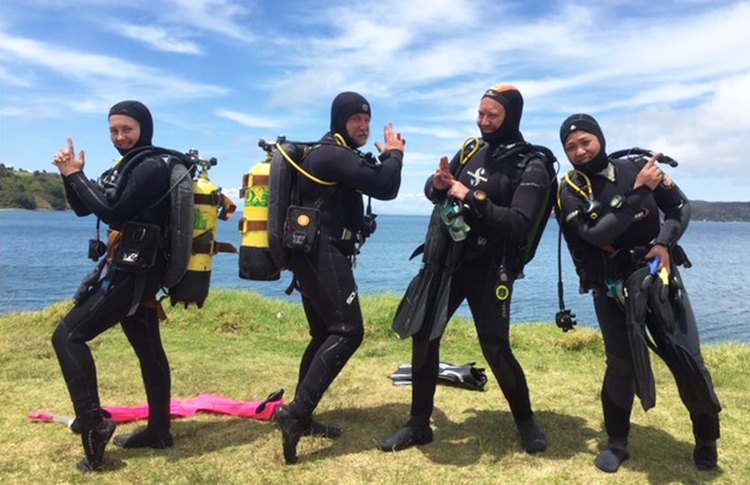
What To Expect On Your First Dive
For most people, scuba diving will be unlike anything you've experienced before. You'll be weightless and breathing underwater, for a start! Here's what you can expect:
1) Breathing through a scuba regulator will feel weird at first.
If breathing underwater feels weird at first, that's normal. It doesn't mean you're doing it wrong!
2) The underwater world is louder than you think!
You would imagine plenty of peace and quiet under the ocean, right? Your first dive might be a bit of a shock! Breathing underwater will seem pretty noisy. You'll hear whooshing as you breathe in, and bubbling when you breathe out. After a while, you'll get used to these noises and tune them out.
3) You might feel like you have tunnel vision...
Because your mask reduces your field of vision you won't be able to see what's above, below or beside you very well unless you turn your head. With practise you will get used to looking up, down, left and right to examine your surroundings.
4) ...but at the same time, everything seems magnified.
When you scuba dive, objects appear around 33% closer than they really are. This is because light behaves differently underwater. Your brain will get used to this the more you dive.
5) The density of the water will restrict your movement...
Water is heavy! The faster you move, the more resistance you will feel. That's why divers use slow, controlled movements: it saves you energy.
6) ...but you will LOVE being weightless
Unless you head to outer space, scuba diving is the best way to experience weightlessness. You can hover, float and drift around in ways you never imagined.
7) You're likely to forget your hand signals...
Your brain will be working hard to adjust to the strange new environment you've plunged into. Everything looks and sounds so different! So cut yourself some slack if you forget the skills you've learned, and your instructor needs to re-explain things to you. It's pretty normal.
8) ...but you'll never forget your first dive.
The adrenaline rush of your first underwater adventure - and the sense of wonder as you explore the ocean for the first time - will never leave you.
Book your Open Water Diver Course in Auckland
Ready to begin your scuba journey? Global Dive is here to help!
You can book your Open Water Diver Course online, or come and chat to us at the Global Dive shop in Newmarket. We pride ourselves on being New Zealand's friendliest dive centre, and we love introducing beginners to the wonderful world of diving.
Our active dive club meets on the last Monday of every month for a BBQ and talks by a guest speaker - and it's totally free to join.
We look forward to meeting you soon!
