
Auckland Lake Pupuke
DESCRIPTION
Dive Site Review by Anna Clague
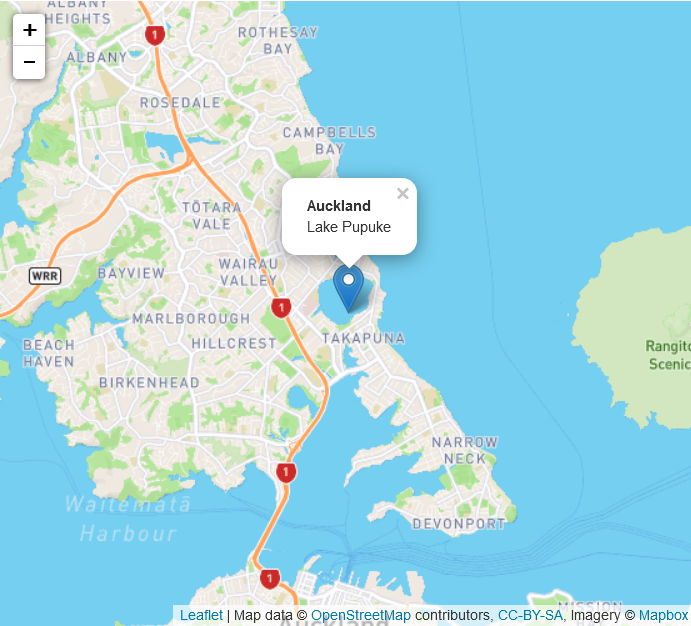
Lake Pupuke is a great fresh water dive site on the North Shore in Auckland.
Due to its location – just over the harbor bridge from downtown Auckland- it is often frequented by divers who don’t have boat access to the Auckland Gulf diving. Little or no drive time is also a bonus as well as being dive-able in all weathers. This also makes it popular for other water activities including rowing, wind surfing and sail or row boating so be sure to take a dive flag with you.
The most popular site at the lake for divers is located at Killarney Park. The park has a theatre, café and toilets situated in the old Pumphouse which is where the North Shore used to get its fresh water supply from. There is ample parking most days but in the school holidays when the theater is running daytime kids shows it can become crowded. There is a grassy area, which is ideal for gearing up, between the carpark and the lake.
There is a jetty for Giant Stride entries or you can do a shore entry from the boat ramp off the grassy slope in front of the carpark. Approximately 50m out from these entry points is a faded pink buoy which is anchored to a concrete block in about 8m. This is a good place to start your dive. You descend down the line onto a concrete pad which covers an area approx 10mx15m. Once you have settled in you can head off exploring.
The topography is fairly flat with a gentle slope from the shore to about 10m where the slope angle starts to get a bit sharper off towards the deeper part of the lake. At its deepest it is approximately 60m. There is a weed line (eel grass, ribbon weed or tape weed) which rings the lake extending about 20m out from the waters edge into a depth of about 6m. The local water fowl tend to nibble this down so it will grow to within a swans’ neck reach of the surface.
You can use the slope of the lake for your navigation as you go exploring. By having it slope down to the left and up to the right on the way out from the base of the pink buoy, then rotating 180 and putting the slope down to your right and up to the left on the way back you should be able to find your way along to the ‘Caves’ (a cluster of rocky boulders with indents at the base forming small overhangs) and back. These are in around 12m.
Alternatively if you head the other way out and back you should come across a grass meadow (chara or nitella) in about 12m or the pipeline in about 7m.
The lake is a fairly murky dive site with average visibility between 3-5m. This has a green – brown hue. The lake bottom is made up very fine silt which when kicked up or disturbed hangs in the water creating ‘dust clouds’ that take a long time to settle, reducing visibility even further. Frog kicking, good buoyancy control and swimming a different track out and back will aid with avoiding diving through these areas of reduced vis.
If there has been an extended period of rain then the runoff from the surrounding grassy slopes can cause the visibility to drop as well.
The temperature of the lake can get into single figures in the winter months and soar into the high 20’sC in the summer months. There are definite thermoclines in the lake that travel up and down through the year and sometimes you can descend through a couple in one dive depending on the depth you go to.
There are all sorts of wildlife living in and on the lake. Bird life such as Ducks, Black Swans, Geese and Australian Coots are common. You can usually find friendly Pukekos’ on the banks and there are a number of Tui’s present as well.
The wildlife you can expect to encounter underwater includes Trout, Perch, Longfin and Shortfin Eels, Common Bully, Snails and in the right conditions Medusa Jellyfish will bloom in the thousands. There are also organised fish releases into the lake for the local fishing fraternity which ensures you will have plenty of wildlife to look out for.
